
How to Stop Emotional Eating (And Why It Happens)
Most women who are trying to lose weight don't struggle because they don't know what to eat.
They struggle because they keep eating when they're not actually hungry.
Maybe the day starts off well.
You're eating balanced meals, you feel motivated, and you tell yourself that this time you're going to stay consistent.
But then the afternoon stress hits, the evening exhaustion sets in, or boredom creeps in, and suddenly food becomes the easiest way to cope with how you're feeling.
So, you reach for something sweet, salty, or comforting, even though part of you knows you're not physically hungry.
And afterwards, you end up feel guilty and upset with yourself.
And if you're anything like most of the women I walk with, you start to wonder why this keeps happening?
Especially when you feel like you're doing all the right things.
This pattern is often called "Emotional Eating," and it's far more common than most people realize (especially for women who are trying to lose weight.)
But despite how common it is, emotional eating is often misunderstood.
Most advice focuses on discipline, willpower, or simply telling you to "have more self-control" around food.
When in reality, emotional eating usually has very little to do with a lack of willpower.
More often, it's a learn behavior where food becomes the fastest way to cope with certain emotions you're probably feeling.
In this article, we'll break down what emotional eating actually is, why it happens so many women who are trying to lose weight struggle with it, and the practical steps you can take to help start changing the patterns.
Key Takeaways
Emotional eating happens when food is used to cope with emotions rather than physical hunger. Stress, boredom, exhaustion, and loneliness are some of the most common triggers.
It’s rarely about a lack of discipline. Emotional eating often develops as a learned habit loop where food becomes the fastest way to change how you feel.
There are clear signs of emotional eating. Sudden cravings, eating when you're not physically hungry, and feeling guilt afterward are common indicators.
Emotional hunger and physical hunger feel different. Physical hunger builds gradually and is satisfied with food, while emotional hunger tends to appear suddenly and craves specific comfort foods.
Many diets unintentionally make emotional eating worse. Strict rules, restriction, and labeling foods as “good” or “bad” can increase cravings and stress around eating.
Breaking the emotional eating cycle starts with awareness. Learning to pause, recognize emotional triggers, and support your body with consistent nourishment can help shift the pattern over time.
Small foundational habits often make the biggest difference. Focusing on simple, sustainable changes can help rebuild a healthier relationship with food.
Table of Contents
The Real Reason Emotional Eating Happens
7 Signs You Might Be Emotionally Eating Without Even Knowing It
1️⃣ Your Hunger Appears Suddenly
2️⃣ You crave Specific Comfort Foods
3️⃣ You eat Even When You Recently Had a Meal
4️⃣ Food Feels Like a Way to Cope with Stress or Difficult Emotions
5️⃣ Eating Happens Almost Automatically
6️⃣ You Feel Temporary Relief After Eating
7️⃣ Guilt or Frustration Shows Up Afterward
Emotional Hunger vs Physical Hunger
Common Triggers for Emotional Eating
Loneliness or Emotional Discomfort 💔
How to Overcome Emotional Eating Without Relying on Willpower or Motivation
3️⃣ Replace the Coping Mechanism
4️⃣ Support Your Body Properly
Why Most Diets make Emotional Eating Worse
A Simper Approach to Weight Loss and Emotional Eating
Where to Start If Lose Weight & Emotional Eating Has Been a Struggle

What Is Emotional Eating?
Emotional eating is a term that gets used a lot, but many people aren't completely sure what it actually means.
At its core, emotional eating is when someone eats in response to emotions rather than physical hunger. Instead of eating because the body needs fuel, food becomes a way to cope with how someone is feeling.
This can show up during moments of stress, boredom, loneliness, frustration, or even exhaustion after a long day. In those moments, food can feel like the fastest and easiest way to create comfort or relief.
For example, someone might reach for snacks after a stressful day at work, crave sweets when they're feeling overwhelmed, or find themselves eating out of boredom in the evening (even if they already had a balanced dinner).
And while it may feel frustrating or confusing when it happens, emotional eating is actually very common.
Many people develop this pattern over time because food temporarily helps regulate emotions and creates a short-term sense of comfort.
The challenge is that while food may provide temporary relief, it doesn't actually address the emotion underneath it.
Over time, this can create a cycle where certain feelings automatically trigger the urge to eat, even when the body isn't physically hungry.
The Real Reason Emotional Eating Happens
Many women believe emotional eating happens because they lack discipline or self-control.
But in most cases, that's not actually the issue.
Emotional eating usually develops because food becomes part of a learned behavioral pattern.
And over time, the brain begins to associate certain emotions with eating, because food temporarily creates relief or comfort.
This loop often loos something like this:
A stressful situation happens, or an uncomfortable emotion shows up.
That emotion creates a desire to feel better, calmer, or more relaxed.
Food becomes the quickest and most accessible way to change how you feel, so you eat something comforting.
And for a moment, the food works. It creates a temporary sense of relief, distraction, or pleasure.
But because that relief is short-lived, the brain learns to repeat the behavior the next time a similar emotion appears.
Over time, this creates a pattern where certain feelings (like stress, boredom, loneliness, or exhaustion) automatically trigger the urge to eat, even if the body isn't physically hungry.
This is why emotional eating can feel so confusing. If often has very little to do with knowledge about nutrition or healthy habits.
Instead, it's a habit loop that the brain has learned over time.
7 Signs You Might Be Emotionally Eating Without Even Knowing It
Emotional eating can sometimes be difficult to recognize, especially because hunger and emotions can overlap.
But there are a few common patterns that can help you identify when eating is being driven more by emotions than by physical hunger.
Here are 7 signs that emotional eating might be part of the pattern.
1️⃣ Your Hunger Appears Suddenly
Physical hunger tends to build gradually over time.
Emotional hunger, on the other hand, often shows up suddenly and feels urgent.
One moment you feel fine, and the next moment you feel like you need something to eat right away.
2️⃣ You crave Specific Comfort Foods
When your body is physically hungry, you're usually open to a variety of foods.
Emotion hunger often focuses on very specific foods (typically things that are sweet, salty, or highly comforting.)
3️⃣ You eat Even When You Recently Had a Meal
One of the clearest signs of emotional eating is the urge to eat even though you're already had a balanced meal not long before.
Because you've already giving your body the nutrients it needs, the desire to eat is usually coming form an emotional need rather than a physical one.
4️⃣ Food Feels Like a Way to Cope with Stress or Difficult Emotions
Many people notice they reach for food during moments of stress, frustration, loneliness, boredom, or exhaustion.
In these moments, eating can feel like a quick way to change how you're feeling.
5️⃣ Eating Happens Almost Automatically
Emotional eating often feels automatic.
You might find yourself grabbing snacks while scrolling on your phone, watching TV, or after a stressful moment, without fully realizing it until afterward.
6️⃣ You Feel Temporary Relief After Eating
Food can temporarily change how you feel. You might notice a sense of comfort, distraction, or relief immediately after eating.
7️⃣ Guilt or Frustration Shows Up Afterward
After the moment passes, many people experience guilt, frustration, or disappointment with themselves.
This emotional response can make the cycle even more confusing, especially when you're trying to make healthier choices.
Emotional Hunger vs Physical Hunger
One of the most helpful ways to understand emotional eating is learning the difference between emotional hunger and physical hunger.
At first, the two can feel very similar. Both can create the urge to eat, and both can show up during the day.
But when you slow down and pay attention to the pattern, there are some important differences.
Physical hunger is your body's natural signal that it needs fuel. Emotional hunger, on the other hand, is usually driven by feelings rather than a true physical need for food.
Here's a simple way to compare the two:
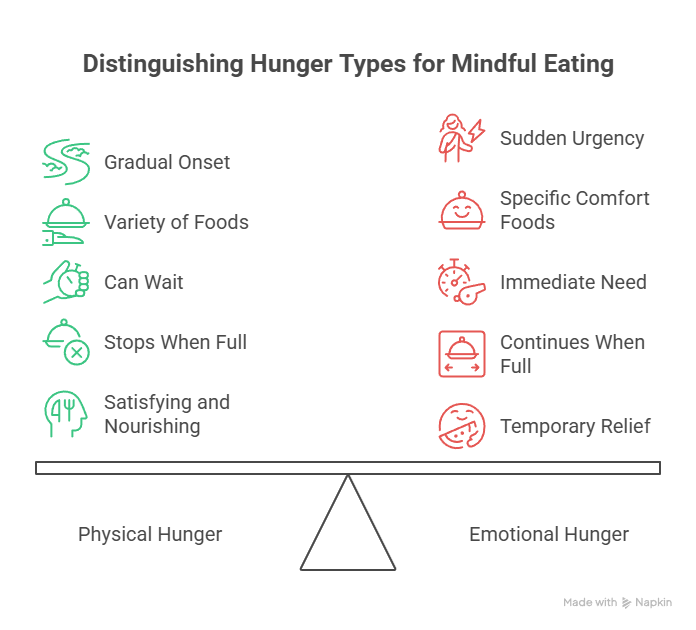
Understanding this difference can be an important first step towards recognizing when emotional eating might be happening.
And the more aware you become of these patterns, the easier it becomes to pause and ask what your body or emotions might actually need in that moment.
Common Triggers for Emotional Eating
Emotional eating doesn't usually happen randomly.
In most cases, it's connected to certain situations, feelings, or patterns that trigger the desire to eat even when the body isn't physically hungry.
Over time, the brain begins to associate these moments with food because eating temporarily changes how we feel.
Here are some of the most common triggers that can lead to emotional eating.
Stress 😟
Stress is one of the most common triggers of emotional eating.
When stress levels rise, the body releases hormones that increase cravings and make high-energy foods feel especially appealing (aka sugar).
In those moments, food can feel like a quick way to calm down or take the edge off a stressful situation.
Unfortunately, because stress tends to show up regularly in daily life, this can quickly become a repeated habit.
Exhaustion 😪
Being tired can significantly lower our ability to make intentional choices around food.
When you're physically or mentally exhausted, the brain naturally looks for quick sources of energy and comfort.
This is one reason emotional eating often shows up in the evening after a long day.
In those moments, food can feel like the easiest way to restore energy of unwind.
Boredom 🥱
Sometimes emotional eating isn't connected to strong negative emotions at all. It can simply happen because someone is bored.
When there's a lack of stimulation or activity, eating can become something to do.
Food provides a small burst of enjoyment or distraction, even if the body isn't actually hungry.
Loneliness or Emotional Discomfort 💔
Food can also become a way to cope with feelings like loneliness, sadness, or emotional discomfort.
In these moments, eating can create a temporary sense of comfort or distraction from difficult emotions.
While this relief may only last a short time, the brain begins to remember that foods helped change how the moment felt.
Restriction and Dieting 🍽️
Another trigger that many people don't realize is restriction.
When someone spends long periods trying to strictly control what they eat or are labeling foods as "good" or "bad," it can create a sense of deprivation.
Over time, this can lead to stronger cravings and make emotional eating more likely, especially during moments of stress or exhaustion.
This is one reason why very restrictive dieting often makes emotional eating patterns worse rather than better.
How to Overcome Emotional Eating Without Relying on Willpower or Motivation
Once you begin to understand emotional eating, the next question becomes:
How do you actually start to change it?
The answer usually isn't trying to force more discipline or relying in willpower.
Instead, the goal is to begin shifting the patterns that drive emotional eating in the first place.
One way to think about this process is through four simple steps:
1️⃣ Build Awareness
The first step is simply becoming more aware of when emotional eating is happening.
Many people eat automatically without pausing to check in with how they're feeling or whether they're actually physically hungry.
Learning to pause for a moment before eating and asking questions like:
Am I physically hungry right now?
What am I feeling in this moment?
What might I actually need right now?
can help bring awareness to patterns that may have been happening on autopilot.
Awareness is often the first step towards changing any habit.
2️⃣ Interrupt the Habit Loop
Once you start recognizing emotional eating patterns, the next step is creating a small pause between the emotion and the action.
This pause doesn't need to be long.
Even taking a few deep breaths, stepping away from the kitchen for a moment, or giving yourself a few minutes to reflect can help interrupt the automatic loop.
That small moment of space gives you the opportunity to choose how you want to respond instead of reacting automatically.
3️⃣ Replace the Coping Mechanism
Emotional eating often happens because food has become the fastest way to cope with certain feelings.
Instead of trying to remove that coping mechanism completely, it can be helpful to start exploring other ways to support yourself when those emotions show up.
Depending on the situation, this might include things like:
going for a short walk
stepping outside for fresh air
journalling or processing emotions
reaching out to a friend
giving your body a chance to rest
Ove time, developing additional ways to cope with emotions can reduce the automatic reliance on food.
4️⃣ Support Your Body Properly
Another important part of reducing emotional eating is making sure your body is being supported with consistent nourishment.
When someone is under-eating, skipping meals, or constantly trying to restrict food, the body naturally becomes more vulnerable to cravings and emotional eating patterns.
Eating balanced meals regularly and giving your body the fuel it needs can make a significant difference in how strong these urges feel.
Over time, combining awareness, habit interruption, emotional support, and proper nourishment can help begin shifting the emotional eating cycle.
Why Most Diets make Emotional Eating Worse
One of the most common things I see when working with women who want to lose weight but have been struggling with emotional eating is that they've often spent years trying different diets.
At first, these diets may seem helpful. They offer structure, rules, and the promise of quick results.
But over time, many women begin to notice a frustrating pattern.
The stricter the diet becomes, the stronger the cravings and emotional eating urges often feel.
This happens for a few important reasons.
First, many diets encourage restriction. Certain foods are labeled as "bad," portions become tightly controlled, and meals may be skipped in an effort to reduce calories.
While this may seem like a helpful strategy in the short term, it can actually create a sense of deprivation.
And when the body and brain feel restricted for long periods of time, cravings naturally increase.
Second, dieting often increases stress around food.
Instead of eating becoming something that supports the body, it can start to feel like something that must be controlled perfectly.
This pressure can make moments of stress, exhaustion, or emotional discomfort even harder to navigate.
And when those difficult moments show up, food can easily become the quickest way to find relief.
Over time, this cycle can create an exhausting pattern of restriction followed by emotional eating.
This is why so many women feel like they're constantly trying to lose weight - trying to be "good" during the week, only to feel like they've failed even time they want something sweet.
But emotional eating and losing weight aren't solved through more restriction or stricter dieting.
Instead, they often improve when people begin shifting their focus toward consistent nourishment, awareness, and supportive habits around food.
That's where a simpler, more foundational approach to weight loss can make a meaningful difference.
A Simper Approach to Weight Loss and Emotional Eating
If losing weight and emotional eating have been a struggle for you, the solution usually isn't trying to follow another diet.
In many cases, what actually helps is stepping back from complicated diets and focusing on a few simple foundational habits instead.
Rather than approaching food with rigid restrictions or all-or-nothing thinking, it can be more helpful to start rebuilding a healthier relationship with food through consistent, supportive habits.
This is the idea behind my FREE Back to Basics Series.
Instead of focusing on perfection, this series focuses on a few key foundational habits that help support both the body and the mind around food.
Things like:
eating balanced meals regularly
choosing mostly whole, nourishing foods
becoming more aware of emotional triggers around eating
developing supportive habits that make consistency easier
These basics may sound simple, but they can make a meaningful difference over time.
When the body is properly nourished and awareness around eating patterns begins to grow, many people start to notice that losing weight and managing their emotional eating urges becomes easier recognize and mange.
Change doesn't usually happen overnight.
But building these foundational habits can create a more supportive environment for long-term progress with food, weight loss, and overall health.
Where to Start If Lose Weight & Emotional Eating Has Been a Struggle
If emotional eating is something you've been struggling with, you're definitely not alone.
Most women I work with feel stuck in the same frustrating cycle of trying to eat well, slipping back into old patterns, and wondering why it keeps happening.
The good news is that meaningful change usually starts with simple supportive steps rather than extreme rules or complicated weight loss plans.
That exactly why I created my FREE Back to Basics Series.
It's a simple starting point designed to help you rebuild a healthier and more sustainable relationship with food.
When you sign up, you'll receive a free start guide along with one email per day over the next 60-days designed to walk you through the foundational habits that support sustainable weight loss and a better relationship with food.
Inside, you'll learn things like:
how to build balanced meals that actually keep you satisfied
how to recognize emotional eating patterns more clearly
simple habits that support consistency with food
practical ways to begin shifting your relationship with food and eating
This series isn't about perfection.
It's about creating a strong foundation so food stops feeling like something you're constantly fighting against.
If you'd like to start building that foundation, you can get access to the FREE Back to Basics Series HERE.
Want More Content Like This?
Check out these articles: